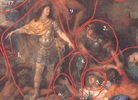
LE BRUN the ''academiste''

For Charles LeBrun art had more meaning than impulsive brush-strokes on a canvas. He was of the opinion that it was smomewhat foolish to copy a landscape onto canvas since this did not require the slightest intellectual effort. '' LeBrun believed that painting was a serious and fundamentally literary discipline, a liberal art whose rightful place was next to poetry, theatre and rhetoric''. LeBrun based his theory of painting on multiple principles that were meant to guarantee their accuracy and to render the message, the emotions and the expressions thus defined immediately recognizable.
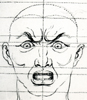
One of the most important step in producing a painting consisted in breathing life into his figures, not just semblance of life but a veritable soul. He adresses the subject in one of his lectures to the Academy of Painting: '' ordinarily all that provokes passions in the soul has some effect on the body...'' Then, he clearly defined the characteristics of each passions.
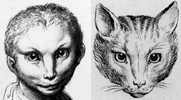
He also established a correlation between the human face and that of the animal whose spirit characterizes a particular emotion.
He also devoted much time to the study of symbols, protocol and customs, which enabled him to add subtle elements to the carefully conceived narration of his composition.